The Dunkin’ Donuts Logo: Orange, Pink and Nostalgic
In 2018 Dunkin’ Donuts took the word “Donuts” out of its own name, which is a strange thing for a donut chain to do. The logo barely flinched: the same orange and pink, the same chunky, friendly lettering, now spelling only “Dunkin’.” That a brand can drop half its name and still be instantly recognizable says a lot about how much work the colors and type had been doing all along. For millions of people the logo is simply what a weekday morning looks like.
From a Quincy Donut Shop to Orange and Pink
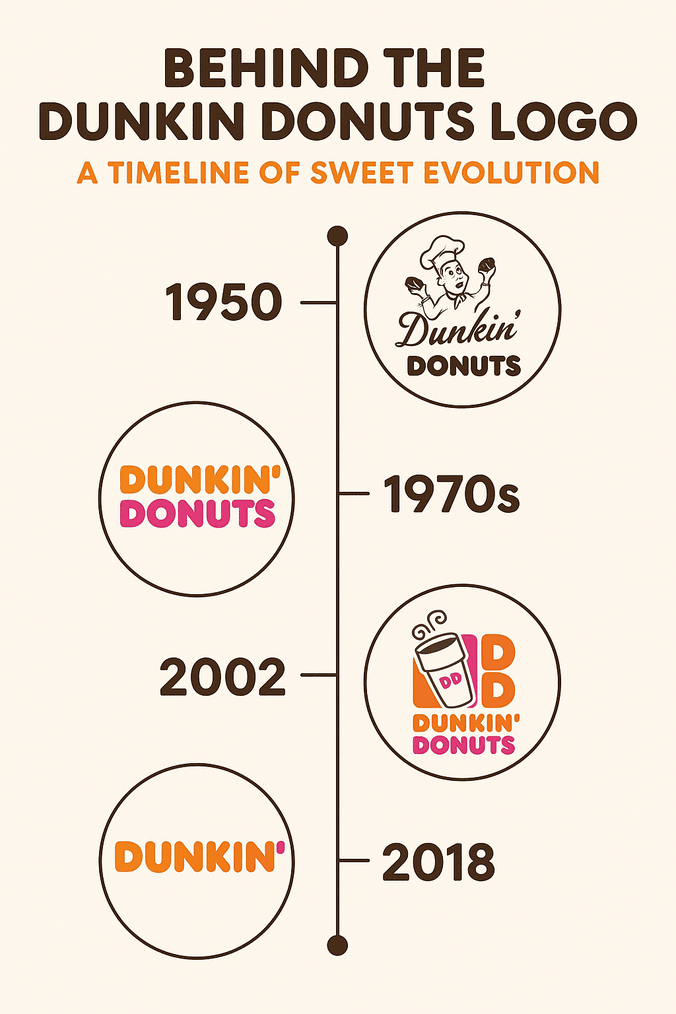
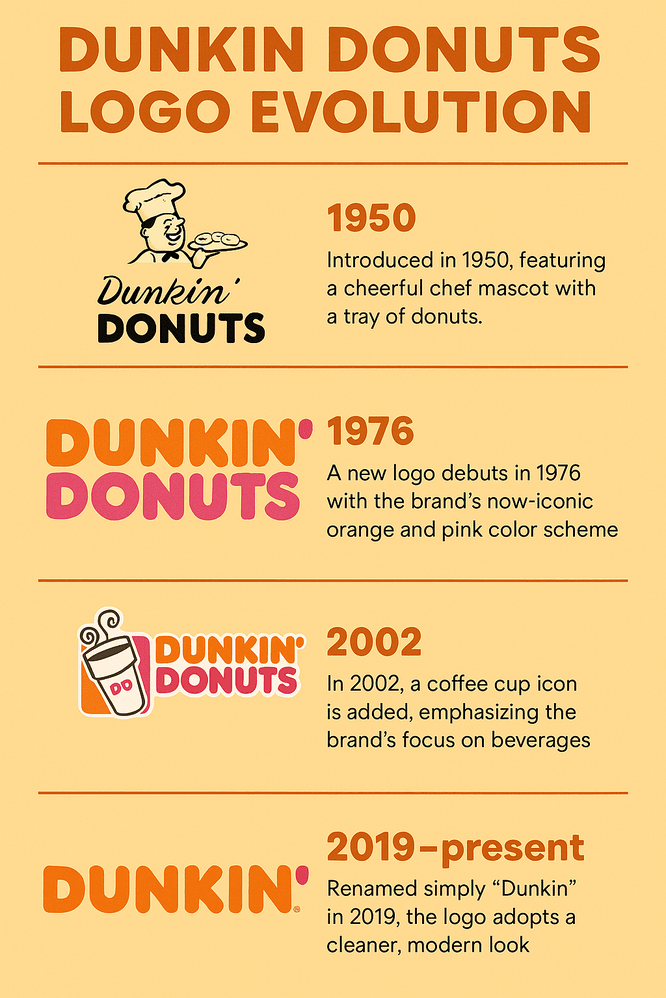
William Rosenberg opened the first Dunkin’ Donuts in Massachusetts in 1950, selling coffee and donuts to a postwar America that wanted cheap comfort food. The original logo looked nothing like today’s. It was a clunky retro script with a chef character, “Dunkin’ Don,” juggling donuts. It looked more like a local diner sign than the start of a national brand, but it had a certain charm.
By the 1970s the logo had become a bold orange-and-pink wordmark, very much of its decade. It was loud and unapologetic, built to catch the eye from a car on a strip of road crowded with signs, long before anyone thought about how a logo would look on a phone.
The brand kept adjusting. In 2002 the logo was refreshed with the Frankfurter typeface and a stylized coffee cup, a clear sign that coffee was becoming the main product. In 2018 the company dropped “Donuts” from its name and the logo followed, becoming just “Dunkin’.” That was more than a trim. It was a deliberate move to compete with Starbucks and to show that the menu now went well beyond the donut case.
Why Orange and Pink Work
Few brands get as much out of two colors. Orange suggests warmth, energy and approachability, which suits a place that wants to feel like the coffee stop on your corner. Pink adds something playful and a little young, the color of a treat. Orange reads as optimism and pink as nostalgia and fun, and together they make Dunkin’ feel like a sunny morning even in a rainy commute.
Put it next to Starbucks’ moody green siren, which signals a more serious coffee drinker, or the earthy reds of Tim Hortons, which lean into Canadian coziness. Dunkin’s palette was a deliberate choice to stand apart in a crowded market. If you are building a brand, choose colors that tell your story, whether that story is bold and playful or quiet and minimal.
Type and the Coffee Cup
The Dunkin’ logo is simple. Its lettering is clean but rounded, with enough curve to feel friendly rather than corporate. The coffee cup added in 2002, a tilted, slightly rough illustration, brings a bit of whimsy without crowding the wordmark. Clean shapes and bold colors make the logo versatile: it works on a storefront, a cup sleeve and a phone app without losing anything.
The practical lesson is that you do not need flourishes to be memorable. A strong typeface and one good icon are enough. Most first attempts at a logo have too much in them, and the job is usually to take things out.
A Monogram of Sorts
Dunkin’ has no monogram in the Louis Vuitton sense. The closest thing is the rounded “D” of the wordmark, paired with the coffee cup. Together they suggest speed and accessibility. Dunkin’ presents itself as the everyday coffee shop, not a precious café. The tilt of the cup implies movement, as if the coffee is already on its way out the door with you. Quick, reliable and a bit fun: that is the brand in one image.
This is a reminder to think past appearance. Logo software can generate hundreds of options in minutes, but the designs that last carry a meaning their audience recognizes.
Modernizing Without Losing the Brand
The 2018 change to “Dunkin’” was a bold move: it removed the product the company was named after, to reflect a broader menu of coffee, breakfast sandwiches and snacks. Yet the orange and pink stayed, and so did the lettering. That is how to modernize a logo without alienating people. The audience saw something familiar that was clearly moving forward.
Whether you hire a designer or do it yourself, make sure your logo can grow with your business. Dunkin’ has stayed relevant through enormous cultural change, from disco to TikTok, because its core look was flexible enough to carry new meanings.
A Logo That Tracks How America Eats
Dunkin’s logo has followed America’s changing relationship with food. In the 1950s it was about indulgent donuts during the postwar boom. By the 2000s the coffee cup reflected the rise of grab-and-go eating. The 2018 rebrand fit the Instagram era, when bright colors that stand out in a feed became an asset. Each version of the logo caught its moment, from suburban comfort to city rush.
McDonald’s golden arches say fast food empire. The Starbucks siren says affordable luxury. Dunkin’ sits between them, accessible but with a little aspiration, used by construction workers and influencers alike. It is one of the better examples of playful branding defining a company’s place in the culture.
Donut Shortages and Recalls
Dunkin’ has had its embarrassments. In early 2025 a donut shortage hit stores in Nebraska, New Mexico and elsewhere, blamed on a “manufacturing error” at a supplier. Customers on X joked that dropping “Donuts” from the name had jinxed the company. The shortage affected 4% of U.S. stores, and the chain recovered quickly, which says something about how sturdy the brand is.
Then came the 2025 listeria recall of 2 million donuts, including eclairs and coffee rolls. That is not a logo problem, but it is a reminder that logos run on trust. A good logo gets people through the door. Only the product keeps them coming back, and a design is only as strong as the business behind it.
What the Logo Is Worth
Inspire Brands bought Dunkin’ for $11.3 billion in 2020, a price that reflects how valuable the brand had become. The logo is central to that value, recognizable across 13,200 locations worldwide. Inspire is privately held, so there is no share price to follow, but Dunkin’s growth since the rebrand and its focus on coffee have pushed it into new markets, and a logo that works on cups and billboards alike makes that expansion easier.
For people starting a business, the return on a good logo is real. AI tools have made a professional-looking design affordable for startups, which narrows the gap with chains like Dunkin’ at least a little.
Consistency
Dunkin’s identity is as consistent as its coffee is meant to be. The logo appears on cups, napkins, boxes and signs, and every one of them looks unmistakably Dunkin’. That consistency builds trust; the brand feels like an old friend because it never shows up looking different. A logo is a promise, and Dunkin’s promises quick, friendly service.
Small brands can get the same effect with a basic brand kit: the same files, colors and spacing used on social media, business cards and packaging. A unified look is not optional if you want people to remember you.
What the Logo Says
The visual language is joy and accessibility. Bold colors and simple type say the place is for everyone. The 2018 “Dunkin’” wordmark kept that warmth while looking more modern. If you are designing a logo, the job is the same: pick type and colors that match how your brand talks, playful like Dunkin’ or cool and sleek like Apple.
Dunkin’ on Social Media
Online, the logo does very well. #Dunkin and #DunkinDonuts have millions of posts, many of them neon-lit storefronts and iced coffee selfies. Orange and pink stand out in a feed whatever filter is applied, and the logo has become part of the culture beyond the stores themselves. Before you finalize your own logo, test it on social media mockups to check that it holds up.
Technology and AI in Logo Design
AI tools have made logo creation open to almost anyone, with a professional-looking design possible in minutes. Something like the Dunkin’ logo, clean lines and bold color, is exactly the kind of output these tools produce well. They are trained on large numbers of existing designs, which is why their results tend to look current, and also why it is worth checking that what you get is distinctive.
For small businesses the main thing to watch is the watermark on free plans. Services such as Semplr let you download high-resolution files you can actually use. Dunkin’s history suggests that simplicity and adaptability matter most, and those happen to be the qualities AI tools are good at.
What the Logo Sits On
Dunkin’s menu is built on small indulgences: donuts, coffee, bagels, sandwiches and seasonal items like heart-shaped donuts for Valentine’s Day. The logo ties it all together, from pumpkin spice lattes to Munchkin boxes. The 2025 shortage and recall were real setbacks, but the strength of the brand, anchored by the logo, has kept customers loyal.
Dunkin’, Starbucks and Tim Hortons
Against Starbucks’ siren and Tim Hortons’ rustic charm, Dunkin’ is the scrappy one. Starbucks feels exclusive, with its dark green and mythical imagery. Tim Hortons’ red and brown are homey but muted. Dunkin’s orange and pink are bold and unpretentious, and they give the brand a space of its own in the coffee wars. The point for anyone designing a logo is differentiation: look at the competition first, then choose colors and styles they are not using.
If Dunkin’ Tried an AI Logo Generator
Imagine Dunkin’ planning a 2025 refresh and typing a brief into an AI logo generator: coffee shop, playful, orange and pink, rounded sans-serif. The tool would return a dozen options, perhaps a sleek coffee cup, a stylized “D” or a donut-shaped monogram. Designers would then adjust the output, perhaps softening the orange for more warmth. The result might feel like Dunkin’ with a modern edge, delivered as a high-resolution SVG ready for rollout.
This is a hypothetical, but it shows that these tools are not only for startups. Established brands can use them to test ideas quickly and cheaply before a human designer takes over.
Making a Logo With AI
- Define your brand first. Decide whether it is playful like Dunkin’ or minimal like Apple, and give the tool a clear brief.
- Choose colors on purpose. Orange for energy, blue for trust: pick the feeling first.
- Keep it simple. Dunkin’s logo works because of its clean lines. Remove clutter from whatever the tool gives you.
- Customize. Adjust the type and icon until the logo is clearly yours.
- Test it everywhere. Check it on business cards, in an app icon and on social media.
- Get clean files. Make sure you can download the final logo without a watermark and at high resolution.
What Dunkin’ Gets Right
Dunkin’s logo has survived losing the word it was named after, which is about the hardest test a brand identity can face. It passed because the orange, the pink and the rounded lettering had already become the brand in people’s minds. That is the useful lesson for anyone starting out: pick a couple of colors and a typeface with real personality, use them everywhere, and they will eventually say your name for you.