The Kellogg Logo: History of the Red Signature Script
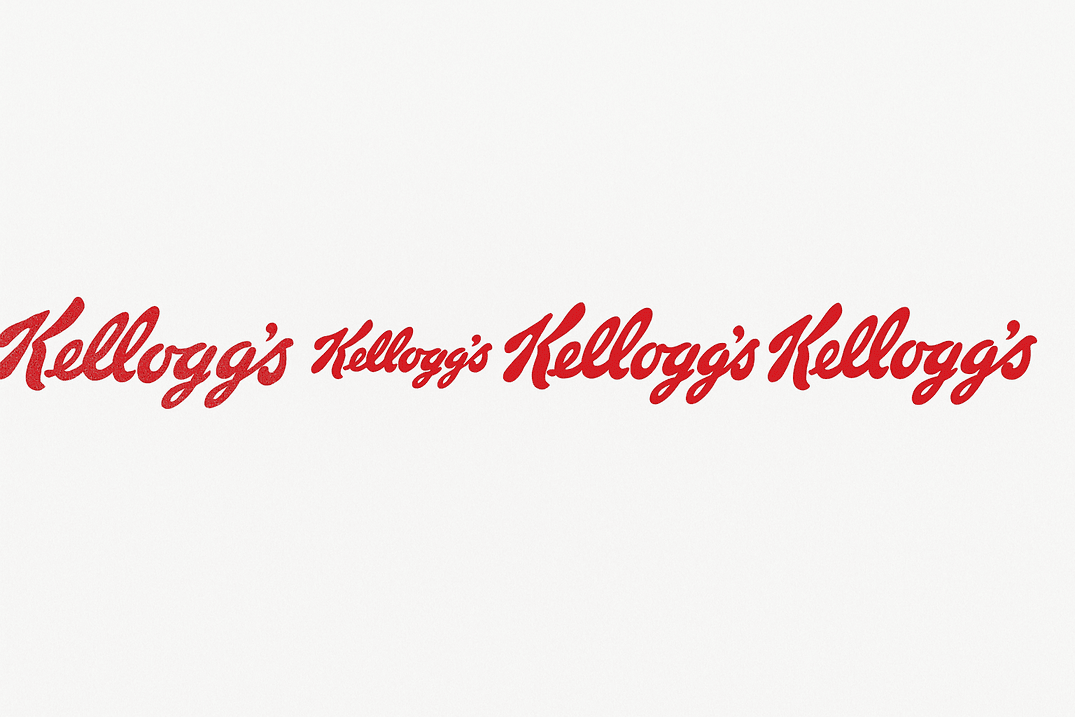
The Kellogg logo is a signature. The red script on every box of Corn Flakes grew out of Will Keith Kellogg’s own handwriting, and for well over a century the company has done little more than sharpen it. On a supermarket shelf crowded with cartoon tigers, toucans and elves, the brand’s own mark is just a name written in red, and it is one of the most recognizable things in the aisle.
A Name Signed in 1906
The story begins in Battle Creek, Michigan, in 1906. The Kellogg brothers, Will and John, had been experimenting with toasted corn flakes and wanted to sell them widely. A product needs a name and a name needs a mark, and the one they chose was a hand-drawn signature based on Will Keith Kellogg’s penmanship. It was less a design decision than a statement of ownership: this is mine, and I stand behind it.
It was very much a logo of its time. It was personal and tactile, obviously made by a human hand. In that era a logo worked like a handshake or a promise, and putting your own signature on every box was the most direct way to say that the product inside was good.
Why the Red Works
The red is a fire-engine red, and it stands out on a box the way a cherry stands out in a bowl of bran. Red signals urgency, appetite and excitement, which suits a brand that wants you to tear open a box at seven in the morning. It is about as close to a call to action as a color gets.
There is some evidence behind the idea. Studies suggest red raises heart rate and stimulates appetite, which is one reason fast-food chains such as McDonald’s and KFC rely on it. For Kellogg, red made the logo, and the cereal, stand out in grocery aisles full of beige packaging. A palette is never only about looks. It sells, quietly, every time someone sees it.
The Script
The typography carries the logo. The cursive script, with its swooping K and loose loops, looks dashed off by someone very confident. The informality is deliberate. A handwritten style feels warm and approachable, like a neighbor rather than a corporation.
Compare it with the clean sans-serif logos of tech giants like Google. Kellogg’s script belongs to a time when brands felt like people, not systems. That folksy charm is hard to fake, which is one reason so few newer brands try.
Why a Signature Feels Personal
The logo is literally an autograph of the man who founded the company. In branding terms that is very valuable. A signature implies authenticity, ownership and pride, the same qualities luxury brands like Louis Vuitton and Cartier reach for with monograms and founders’ initials. Kellogg’s says that Will Kellogg stands behind every flake.
That meaning still works today. The red script on a box of Special K carries more than a hundred years of history with it. Symbols matter, and a logo that tells a true story about a business will outlast one that only looks good.
Classic Over Trendy
Kellogg’s logo history is a series of small adjustments rather than overhauls. Since its debut the mark has been refined, with cleaner lines and a stronger red, but never reinvented. The reason is simple: it works. Like a classic song, it is instantly recognizable and does not wear out.
That is the opposite of brands that overhaul their logos every decade, sometimes disastrously, as Gap found with its short-lived 2010 logo. Kellogg’s restraint is a lesson for anyone tempted by a fashionable design. A trendy mark might get attention for a while. A classic one earns loyalty.
How the Logo Shaped Breakfast
The logo has been on lunchboxes, in Saturday-morning cartoon ad breaks and now in the Instagram feeds of influencers pouring oat milk over Raisin Bran. From the 1950s, when Tony the Tiger arrived, to today’s wellness-focused Special K campaigns, the red script has been the thread tying the company’s products together.
It is also adaptable. The logo scales from cereal boxes to billboards to tiny app icons without trouble, which is worth studying. It is versatile without losing its character, and that is rarer than it sounds.
Controversies
Kellogg’s has had its share of criticism, and the logo has sometimes been at the center of it. There have been debates over sugary cereals and accusations of misleading health claims. In the 2000s parents criticized the company for marketing high-sugar products to children, and the red logo was on every box of Froot Loops.
More recently the company has faced scrutiny over labor practices, with strikes at its factories making headlines. The logo has come through all of it largely untouched. A well-established mark tends to outlive the scandals around it, which is one more reason to make it strong from the start.
The Logo and the Share Price
Kellogg’s branding, with the logo at its center, has supported a very large business. As of 2025 Kellogg’s stock (K) trades at around $80, with a market cap above $27 billion. The logo’s consistency has been a quiet partner in that growth, building the kind of trust that turns into sales. A red script can be as valuable as a factory.
Brands with inconsistent identities often have a harder time holding on to customers. The takeaway for a startup is simple: a coherent logo, used the same way everywhere, is a commercial asset.
One Script Across Many Products
The logo ties together products as different as Corn Flakes and Pringles, and it makes them feel like parts of one story. That consistency is why people trust a new Kellogg’s product, even an unfamiliar flavor. Familiarity comes from repetition, and familiarity sells.
For your own logo, the point is to design something that can anchor a brand across platforms, products and decades, not just the first product you launch.
Design Lessons
The Kellogg logo suggests a few clear lessons. First, simplicity matters most: the red script is uncluttered, memorable and scalable. Second, personality counts. The handwritten feel of a logo can make a brand seem human rather than corporate. Third, color is a powerful tool, so choose one that creates the right feeling.
Finally, do not overcomplicate things. Plenty of designers assume complexity looks sophisticated. Kellogg shows how much can be said with very little.
What the Logo Says
The logo communicates on two levels. The cursive script says friendly and trustworthy, and the bold red says wake up and eat. Between them they cover most of what a breakfast brand needs to say, and they do it before anyone reads a word on the box.
Technology, AI and Logo Design
Today the sketchpad has competition. AI logo generators such as Looka, Canva and Semplr can turn out logos faster than you can say “Snap, Crackle, Pop,” using machine learning to suggest trends, colors and fonts suited to a brand. For a startup on a tight budget they offer professional-looking designs without a designer’s fee.
They cannot quite match a logo like Kellogg’s, though. They are fast and produce plenty of variety, but a founder’s own signature is not something an algorithm can supply. It is easy to imagine Kellogg’s design team typing “red, cursive, breakfast, trust” into one of these tools and getting back variations on their own script, perhaps with a different swoop on the K or a bolder red. The results might be most of the way there and still need a human hand to get the nostalgia right. For a brand like this, software is a brainstorming partner, not a replacement for a century of history.
Making a Logo of Your Own
Whatever method you use, the steps are similar:
- Define the brand. Know the business name, the industry and the mood, playful or professional, before you start.
- Customize with care. Adjust fonts, colors and icons until they fit the brand: red for appetite, as with Kellogg, or blue for trust.
- Test versatility. Check the logo on business cards, websites and social media.
- Get proper files. Keep high-resolution PNG and SVG versions and refine them as needed.
- Be specific. A brief like “vintage-style logo with warm colors for a cozy bakery” gets far better results than “logo for bakery,” from a person or from software.
Why the Kellogg Logo Still Works
The Kellogg logo works because it is a real thing, a founder’s signature, used the same way for more than a hundred years. Its simplicity, its red and its personality have carried a breakfast business through sugar debates, strikes and the arrival of every new cereal mascot. Most brands do not have a founder’s signature to fall back on. They can still copy the more important habit, which is to find a mark that is true and then leave it alone.
Which Kellogg product do you associate most with that red script? Tell us in the comments.