The TikTok Logo: History, Colors and Design
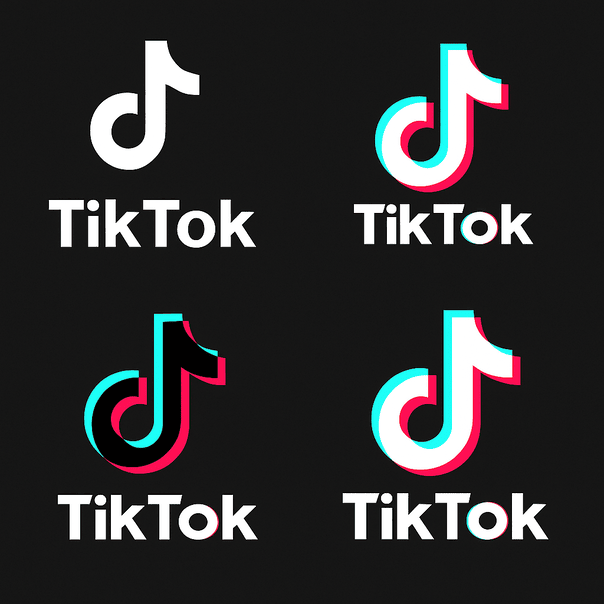
The TikTok logo is a single music note, and it looks like it is vibrating even when it sits still on your home screen. That effect comes from two offset colors, cyan and magenta, printed slightly out of register against black, and it has made one of the plainest symbols in music into one of the most recognizable app icons of the past decade. The note itself is nothing new. Clefs and quavers have been on sheet music for centuries. What TikTok added was the jitter, and the jitter is the whole idea: it makes a still image feel like it is in motion, which is exactly what the app is selling.
It is also a useful logo to study because it is so young. Most of the marks on this site took decades to settle. TikTok’s arrived almost fully formed, and it has had to prove itself in a few years rather than a few generations.
From Douyin to TikTok
The story starts in China. In 2016 an app called Douyin launched with a logo that was, frankly, dull: a plain black music note on a white background. It did its job and nothing more, about as exciting as a slide in a PowerPoint deck.
When Douyin was rebranded as TikTok for the global market in 2018, the logo changed a great deal. The flat note gave way to a 3D-looking, neon-edged version, glowing cyan and magenta on a stark black background. It was bold and playful and looked unmistakably current. The new note seemed to move even when it was standing still, and that sense of captured energy is what most people remember about it. The logo made it clear that TikTok had no intention of blending in with the apps around it.
Neon Colors and How the Brand Feels
Most of the logo’s life comes from color. Cyan tends to read as innovative and creative, and magenta adds a little youthful rebellion. Put together on black, they feel futuristic and fun at once, which suits an app built around people showing off.
Set it next to its neighbors on a phone and the difference is obvious. Instagram’s sunset gradient feels warm and slightly nostalgic. Twitter’s blue bird was quiet and simple. TikTok’s colors are loud. Neon belongs to nightlife, and it is hard to look at the icon without thinking of a club at 2 a.m., which is presumably not an accident. The lesson for designers is that color does more than decorate. It decides how a brand feels before anyone reads a word. Bold, contrasting colors can carry a lot of emotion, but they need to stay disciplined. TikTok uses two accent colors and black, and stops there.
The Note, the Glow and the Wordmark
The symbol is minimal: one musical note, given depth and movement by the 3D effect and the neon glow. There is no lettering inside the icon. The wordmark “TikTok” sits beside it in a clean sans-serif and lets the note do the work. That split is why the logo scales so easily, from a tiny app icon to a billboard.
The 3D effect borrows from skeuomorphism, the old habit of making digital objects look like physical ones, but TikTok handles it lightly. It is a bit like a vinyl record remixed for the streaming age. The broader point is that simple does not have to mean boring. One element, done well, beats a cluttered design almost every time, and a gradient or a shadow can add depth without turning a mark into a picture.
What the Note Stands For
The note nods to the app’s origins in lip-syncing, but it works on a wider level too. Music crosses languages, and so does TikTok, where a teenager in Tokyo and a retiree in Texas can both go viral with a well-timed dance. The note’s rounded, friendly shape invites people in. Compare the sharp, fast lines of the Nike swoosh, built to suggest athletic precision; TikTok’s mark is softer and less demanding.
It also carries a promise that matters to the business: you do not have to be a professional to make something here. That is the core of TikTok’s branding, and the note says it without any copy. For anyone choosing a symbol, the takeaway is to pick something people already share, a sound, a gesture, an everyday object, and let it speak to the values your audience already holds.
Will It Last?
It is too early to call the TikTok logo timeless, but its modernist bones suggest it could age well. It mixes minimalism with a futuristic finish and avoids the fads that date logos fastest, such as ornate detail and fussy gradients. Apple is the obvious comparison: a simple apple that has barely changed since 1977. TikTok’s note could follow the same path, adjusted quietly over the years without losing its core.
The practical rules here are familiar. Favor clean lines and design for every size. A logo has to look as good on a smartwatch as it does on a Times Square screen, so test it at both extremes before you commit.
The Logo of the Short-Video Era
The note has become shorthand for short-form video, the format that has reshaped how people watch things online. It is the visual sign of a platform that launched careers, from Charli D’Amelio’s dances to Khaby Lame’s silent comedy. The logo turns up in app stores, on merchandise and even on protest signs, which puts it in a small group of corporate marks that have become cultural reference points.
YouTube’s play-button logo now feels like it belongs to the desktop era, and Snapchat’s ghost never quite caught the mood of the moment the way TikTok has. TikTok’s note is a product of its time, but it has also helped shape that time: fast, fleeting and fiercely creative, very much the 2020s.
Knockoffs and Cultural Debates
A logo this big attracts trouble. Copycat apps have imitated the neon note to pull users away from the real thing. There is also a harder argument about credit: TikTok’s algorithm has been criticized for amplifying trends that started in marginalized communities without acknowledging where they came from, and the logo, as the face of the brand, gets dragged into that fight. A logo cannot fix systemic problems, but it can become the target for them.
For designers this is a reminder that a logo stands for the company’s behavior as well as its look. Think about the cultural context of any mark you make, and check whether it echoes something you would not want to be associated with. Software can generate ideas quickly. Making sure they are appropriate is still a human job.
The Money Behind the Note
ByteDance, TikTok’s parent company, is not publicly traded, but its valuation, estimated at $400 billion in 2025, gives a sense of how much the brand is worth. The note is a big part of that. It is instantly recognizable and attached to a platform that brings in billions in advertising. Meta’s minimal “M” logo, by comparison, has a hard time matching TikTok’s energy in the fight for attention.
A strong logo adds to brand equity, which makes it easier to attract investors and partners. The same holds at a much smaller scale. A clean, professional mark tells customers that a small business is serious, and that can turn into real money.
Consistency Across Every Surface
TikTok’s brand identity is tightly controlled. The note appears the same way in the app, in advertising and on merchandise, from T-shirts to tote bags, so people know what they are getting when they see it. Twitter is the counterexample: its run of logo changes around the X rebrand left a lot of users confused.
If you are designing a mark, make sure it works on business cards, websites and social media before it goes anywhere, and then use it the same way every time.
The payoff is attention. Users spend nearly an hour a day on TikTok, a figure that has doubled since 2019, and the app takes 32% of the time Americans spend on social media. That works out to around 34 hours a month spent in an app whose door is that small neon note. A simple, bold mark does not create that habit on its own, but it is the thing people tap every time.
Four Lessons From TikTok
The note has a few clear things to teach. Keep it simple, because a single symbol can say more than a crowded canvas. Use color deliberately to set the mood you want. Make it versatile enough to work on any screen. And think about culture, because the logo will be seen by very different audiences, so it should welcome them rather than shut anyone out.
If you want something with TikTok’s energy, try bold colors and lively shapes, but keep the construction clean. Push the effects too far and you end up with something closer to 1990s clip art than a modern app icon.
A Playful Visual Language
Playfulness runs through all of TikTok’s design. The logo sets the tone with its glow, and the app carries it on with bold type and bright icons that push people to create and share. It is one of the clearer examples of a playful brand where the logo anchors everything around it, rather than sitting on top as an afterthought.
For your own work, start with the story you want to tell and let the logo, the website and everything else follow from it. A logo that matches the rest of the brand is far more convincing than a good logo bolted onto a mismatched site.
The Note in Billions of Videos
The note is more than an app icon now. #TikTok has billions of views, and the logo appears, usually as a watermark, in countless videos, from dance challenges to DIY tutorials, often after they have been reposted to other platforms. That spread makes it one of the most recognized logos of the decade, in the same company as Nike and Apple, and shows how far a logo can travel outside traditional media.
The practical lesson is to design for social media first. A logo has to hold up as a profile picture or a small overlay in the corner of a video. If it falls apart at that size, it will not survive online.
Technology, AI and a Possible Redesign
TikTok’s logo was almost certainly drawn by people, but its clean, scalable shape is the kind of result AI tools now aim for. AI logo generators such as Looka, Canva, Hatchful and Semplr analyze trends, suggest palettes and produce designs that can be tested at different sizes and on different platforms, without an agency’s fees. They lower the barrier for small businesses and creators who could never have hired a studio, and they work like a tireless junior designer who never needs a break.
As a thought experiment, imagine TikTok’s own team running a 2025 refresh through one of these tools, feeding in words like “playful,” “neon” and “music.” The suggestions would probably be a sleeker note, a new gradient or a holographic finish, all keeping the core note and pushing the futuristic side a little further. Nobody at TikTok has announced anything like that. The point is that quick idea generation is useful even for large brands, as a way to brainstorm before the real design decisions get made.
More Than One App
TikTok has grown well beyond short videos. Businesses buy TikTok Ads, shoppers use TikTok Shop, and creators broadcast on TikTok Live. The logo ties these together, from ad campaigns to branded merchandise. E-commerce has been the big push: in 2025 TikTok Shop has driven billions in sales and rivals Amazon in some markets.
The company keeps launching new products too, including TikTok Notes, a photo-sharing app introduced in 2024, and TikTok Music, a streaming service. Each one carries the same neon energy. For logo designers, that is the test of a strong core mark: it has to stretch across very different products and still look like itself.
TikTok Against Its Rivals
Against the competition, TikTok’s logo holds up well. Instagram’s gradient is warm but lacks the futuristic edge. Snapchat’s ghost is playful but feels niche, and YouTube’s play button now looks dated. TikTok’s note comes out ahead on bold simplicity and broad appeal, and it is recognizable across cultures.
The lesson is about standing out without copying. Look hard at what makes a competitor’s logo work, then go somewhere else with it. Putting your draft side by side with the logos it will sit next to on a phone screen is the fastest way to see whether it has its own voice.
TikTok in the News
TikTok has stayed in the headlines through 2025, largely over its fight with U.S. regulators about data privacy, and the note is usually the image editors reach for when they cover the story. It has become a symbol of the app’s global reach. TikTok’s own messaging has stayed on creativity and community, with campaigns such as #CreateWithTikTok urging users to try new things, and the glowing note front and center in the ads.
The company also appeared at InfoComm 2025, showing its advertising technology alongside AV companies such as Sony. Seeing the logo in that setting shows how far it can stretch, from viral videos to corporate trade shows. A logo that only works in one of those worlds would be holding the business back.
What the Note Gets Right
TikTok took the most familiar symbol in music, gave it two colors and a slight offset, and ended up with a mark that feels like motion. The original Douyin note was forgettable. The 2018 version is not, and the gap between them is almost entirely a matter of color and that small shift in register.
That is the part worth taking away. You rarely need a new symbol. More often you need a familiar one treated in a way nobody else has tried, then used the same way everywhere until people stop noticing it is a logo at all.