The Baskin Robbins Logo and Its Hidden 31
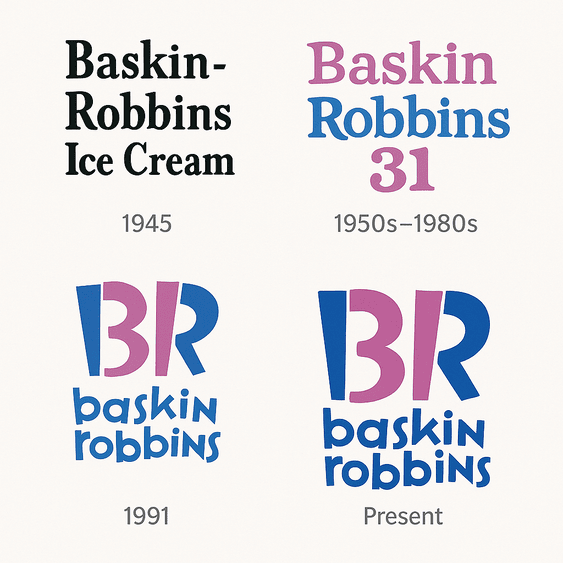
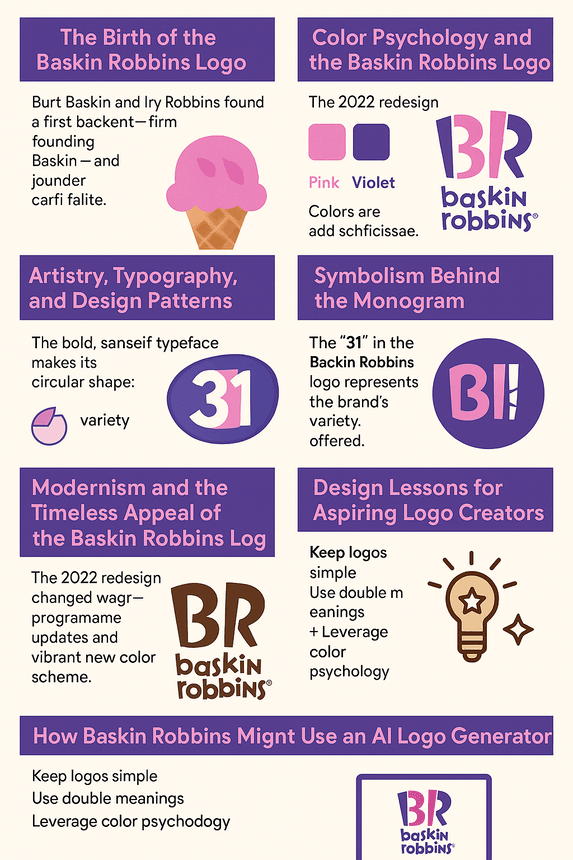
Look at the pink parts of the Baskin Robbins “BR” and you will find a 31, the number of flavors the founders promised, one for every day of the month. That small trick has done more for the brand than any color change. It turns a monogram into a little puzzle, and once you have seen the number you cannot stop seeing it, which is about the best thing a logo can do to a customer.
The chain opened its first shop in 1945, refreshed the logo in 2022 and is still selling scoops to a new generation in 2025. The monogram is the reason the brand looks the way it does, and it is a good case study for anyone trying to put meaning into a mark without making it fussy.
From Plain Wordmark to BR
The story starts in Glendale, California, in 1945. Burt Baskin and Irv Robbins, two ice cream makers with a taste for new flavors, opened their first shop with a simple idea: a different flavor for every day of the month, 31 in all. The early logo was a plain wordmark with no tricks in it. It said “ice cream” and not much else. It was functional, like a paper cone, but it had none of the personality the brand is known for now.
The logo most people know took shape in the 1990s. The “BR” monogram, with a 31 hidden in the curves of the B and the R, was a genuinely clever piece of branding. It tells the brand’s story at a glance, quietly saying “31 flavors” to anyone who looks closely enough. It works like a visual Easter egg that rewards the observant, and it gave the chain a mark nobody else could copy without looking like a copy. For anyone designing a logo, that is the first lesson: a story hidden in plain sight is worth more than one spelled out.
Pink, Brown and the 2022 Palette
Color does a lot of the emotional work here. The 2022 redesign moved the brand away from its original chocolate brown and bubblegum pink toward a softer, more modern palette of violet and pink. Pink suggests warmth, play and indulgence, which is exactly what an ice cream shop wants you to feel when you walk in: like a kid with a few dollars to spend. Violet is usually read as creative and a bit luxurious, and it adds some polish, a hint that the brand wants to sell an experience and not just a scoop.
Colors speak to people before words do, and the new palette uses that well, balancing nostalgia with something more current. The lesson for designers is to start with the feeling and pick the colors that carry it. Baskin Robbins shows that whimsy and sophistication can sit side by side, much like a scoop of Mint Chocolate Chip next to Pralines ‘n Cream.
Rounded Type and Scoop Shapes
The logo looks simple, and that simplicity is the work. The 2022 redesign refined the “BR” monogram, making the 31 more prominent while keeping the design clean and easy to scale. The type is bold, sans-serif and slightly rounded, and it feels approachable. It says “come in, we’re open” without raising its voice.
The shapes lean on circles and curves, which echo the round top of an ice cream scoop. That is not an accident. Curves read as soft and comfortable, the opposite of the sharp angles a tech brand might use. If you are designing for a food or family brand, try rounded fonts and circular elements early in your sketches. They do a lot of the friendly work for you, and the difference is obvious when you put a rounded and a squared version side by side.
What the 31 Means
The 31 is more than a clever trick. It stands for the brand’s core promise, variety, and that promise has been central since the first shop opened. Putting it inside the logo makes the monogram a piece of shorthand: choice is the point. In 2023 the account @sportslogosnet posted a look back at the logo’s history on X, noting the new logo introduced in spring 2022, and what stands out across all the versions is how the 31 has stayed front and center while everything around it modernized.
For logo designers this is a lesson in building meaning into the form itself. A number, a letter or a small shape can carry a whole brand philosophy if it is chosen well. The trick is restraint. One hidden idea is charming. Three are a puzzle nobody asked for.
Refining Instead of Rebuilding
The 2022 redesign updated the logo without forgetting where it came from. Plenty of brands go for drastic overhauls (Burger King is the obvious example), but Baskin Robbins refined rather than reinvented. The result feels fresh and familiar at once, like a new flavor from a shop you already trust.
That balance is why the logo has aged well. A 2025 Creative Bloq article made the point that the best rebrands update existing assets with a touch of modernism while keeping a sense of history, and this one fits the description. It kept the core elements, the “BR” monogram and the 31, and updated the colors and type for screens. Evolution beats revolution for most established brands. If people already recognize your logo, change it slowly.
A Logo Through the Decades
Baskin Robbins has been part of American eating habits for a long time. In the 1950s it stood for post-war indulgence. In the 1980s it was a fixture of mall culture. Today it shows up all over Instagram. The logo adapted to each setting, from hand-painted signs to neon storefronts to app icons on a phone.
That adaptability matches the brand’s ability to stay relevant in a crowded market. Ice cream chains sell moments as much as dessert, and the logo has been attached to plenty of them: a first date over a Banana Split, a family trip out for a Birthday Cake cone. A mark that has to work on a neon sign, a paper cup and a phone screen needs to be simple, and this one is.
The ACAB Rumor
Hidden meanings can backfire. In 2025 a viral rumor resurfaced claiming the 31 in the logo could be read as “ACAB” (an acronym for an anti-police slogan) when the numbers are mapped to letters of the alphabet. FOODbible looked into it and treated it as an urban legend, saying any link to the new logo’s design was pure conjecture. The rumor still shows the risk of hidden messages: people sometimes find ones you never put there.
Baskin Robbins mostly let the rumor pass and kept talking about what the number actually means, variety. For designers the practical advice is to show a new logo to a few outsiders before launch and ask what they see. Fast tools make it easy to produce many versions quickly, which is all the more reason to check each one for readings you did not intend.
The Business Behind the Badge
Baskin Robbins is owned by Inspire Brands, alongside Dunkin’ Donuts, so it does not trade on its own, but the parent company’s results reflect how strong the brand is. The chain has grown to more than 8,000 locations worldwide, and the logo is a big part of how it is recognized from one country to the next. A 2022 press release tied the logo redesign to a 5% increase in same-store sales, a sign that a fresh look can help the numbers.
Small businesses can take the same lesson at their own scale. A well-made logo is a business asset as much as a piece of design. It makes a company easier to remember, and recognition is what brings people back.
Keeping It Consistent
Consistency is what keeps the Baskin Robbins identity working. Through every version the core has stayed the same: the “BR” monogram, the 31 and a playful tone. That builds trust, because a consistent identity becomes a mental shortcut. On a storefront or in a social post, the logo says “Baskin Robbins” before you read a word.
For a new brand the equivalent is a basic brand kit with matching fonts, colors and logo files, used the same way everywhere. The Baskin Robbins history shows that small tweaks can refresh a brand without breaking it, as long as the core stays put.
Lessons for Logo Designers
Three lessons stand out. The first is simplicity: clean lines and few elements make the logo work in any medium. The second is meaning: the 31 tells the brand’s story in a glance. The third is color with a purpose: the pink and violet palette suggests fun and creativity, which fits the brand.
You can put all three into practice with free design tools. DesignRush reported in 2025 that 66% of creatives say generative AI improves the quality of their work, and AI logo makers such as Semplr make it easy to try out these principles on your own brand. The tools help with speed. Deciding which idea is worth hiding in the logo is still your job.
The Visual Language of Fun
The logo’s rounded type and bright colors invite people to relax and treat themselves. That fits the tagline, “More Flavors, More Fun,” and the brand’s 2025 marketing, which pushes personalization, such as custom ice cream cakes. The logo’s playful look sets the tone for everything from packaging to social media.
Your own logo should sound like your brand in the same way. Try a few styles side by side and keep the one that matches how you talk to customers, not the one that looks most impressive on its own.
Built for the Feed
On social media the logo is everywhere. Hashtags like #BaskinRobbins and #31Flavors trend regularly, and the monogram turns up in endless Instagram photos of bright sundaes. The 2022 redesign was made with screens in mind, with a scalable design that stays clear when it is small. That has made it a piece of cultural shorthand, easy to spot in a busy feed.
This is a good reminder of why you should design for digital first. Before you settle on a logo, check that it holds up as a tiny app icon and as a billboard.
Technology and AI in Logo Design
AI tools have made logo design far more accessible. According to a 2025 Medium article, the global AI logo generator market is projected to grow at a CAGR of 20% between 2024 and 2033. Tools of this kind could easily have helped refine the Baskin Robbins logo, suggesting color tweaks or font pairings to sharpen its modern look.
As a thought experiment, picture the company’s design team using one in 2025 to brainstorm a future redesign. They would type in words like “playful,” “modern” and “ice cream” and get a stack of options back. The software might suggest a neon-inspired palette for a bolder look, or a 3D “BR” for augmented reality campaigns. The current logo hardly needs it, but quick variations are a cheap way to see where a brand could go next. Small businesses get the same advantage: fast, affordable iteration that used to require an agency. Even iconic brands keep evolving, and these tools make that easier to test.
Flavors and Recent News
Behind the logo is, of course, ice cream. In 2025 the brand keeps adding flavors such as Matcha Madness and Salted Caramel Pretzel Crunch alongside classics like Rocky Road. Recent news points to a push toward sustainability, with eco-friendly packaging and plant-based options, and the marketing stresses inclusivity, with campaigns that show a wide range of customers.
The logo ties all of that together, appearing on compostable cups and in the mobile app. A 2025 press release announced a partnership with DoorDash for faster delivery, which puts the logo in front of even more people on their phones. A logo has to work on every surface a brand touches, physical and digital.
The logo also takes center stage in the 2025 “Sweet on Sydney” menu, a collaboration with actress Sydney Sweeney unveiled on July 1. It features Sydney’s Signature Scoop (Rainbow Sherbet in a chocolate-dipped waffle cone with sprinkles and gummy bears) and Sydney’s Signature Fizz, a sherbet-and-soda blend, both branded with the Baskin Robbins logo. Sweeney said on Instagram that the collaboration was a childhood dream, and her love of the brand’s Rainbow Sherbet inspired the menu. The bright 2022 logo suits the campaign’s colorful look, and it shows how a celebrity tie-in can lean on a logo people already like.
Against Dairy Queen and Ben & Jerry’s
Set beside its competitors, the Baskin Robbins logo holds up well. Dairy Queen’s bold red oval is assertive but has no hidden meaning like the 31. Ben & Jerry’s hand-drawn, folksy style leans hard into social activism, a contrast with Baskin Robbins’ playful neutrality. Baskin Robbins sits in the middle: fun but professional, memorable and versatile.
That points to differentiation. Before you settle on a design, put it next to your competitors’ logos and make sure it does not disappear among them.
What the Monogram Gets Right
The Baskin Robbins logo works because one small idea does most of the job. The hidden 31 tells the brand’s story, the colors set the mood, and the shapes are simple enough to change with the times. The 2022 refresh was sensible because it left that idea alone.
If you are designing a logo for your own brand, look for the one detail that only your business could own, the equivalent of the 31, and build around it. Most logos never find that detail. The ones that do tend to last.